






Economy Policy
The Gig Shift 2030: How one job is no longer the whole career






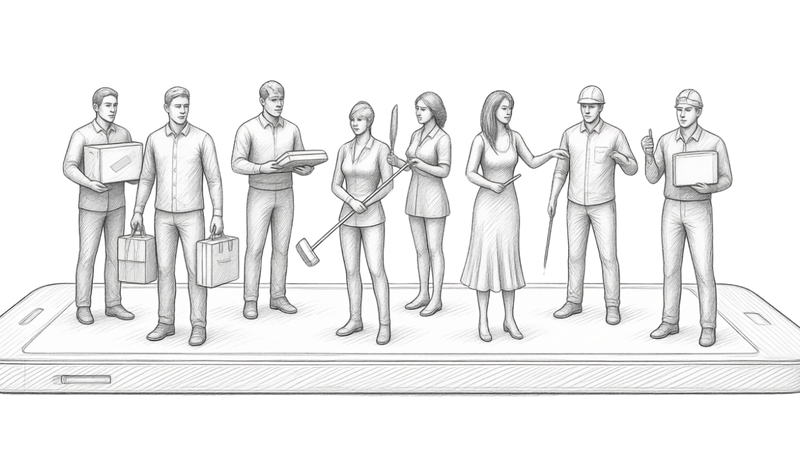
For workers, multiple jobs can mean greater agency over how, when and where they work. But it can also create stress, fatigue and complications around benefits, taxation and job security.
This article was first published in the latest edition of People Matters Perspectives.
The gig economy is no longer simply about earning extra income between jobs. What began as a term describing a patchwork of short-term projects and freelance assignments has evolved into a much broader shift in how work is organised, accessed and performed.
The term “gig economy” was coined by journalist Tina Brown in 2009, but the model has since expanded well beyond freelance professionals piecing together projects. Today, gig and platform work spans ride-hailing drivers, delivery workers, online freelancers, consultants, creators, tutors and other independent workers whose livelihoods may depend on multiple clients, contracts or digital platforms.
What is changing now is the pace and scale of that shift. Layoffs, economic uncertainty, rising living costs and the search for greater autonomy are encouraging more workers to diversify their income, while organisations rethink how they access talent. Across Southeast Asia, platform work is becoming an increasingly visible part of the labour market, even as governments grapple with worker classification, social protection, income security and rights.
But the gig shift is bigger than the rise of platform workers. It encompasses freelancers working directly with clients, professionals building portfolio careers, employees taking on additional work and people combining multiple income streams. The boundaries between traditional employees, freelancers, gig workers and moonlighters are becoming increasingly blurred.
India: A gig workforce in rapid expansion
India offers one of the clearest examples of the scale of the shift. A recent report estimates that India's monthly active gig workforce could grow from more than USD6 million today to between 17 million and USD21 million by 2030.
More than half, or 54%, of surveyed workers were not in paid employment before joining a platform, while more than 30% of the projected gig workforce by 2030 is expected to comprise first-time workers. Platforms are therefore becoming not only an alternative source of income but also an entry point into the labour market.
More than 90% of monthly active gig workers participate part-time, allowing them to combine platform work with education, entrepreneurship, another job or family responsibilities.
The earning proposition is also significant. The report found that full-time gig workers can earn up to 2.5 times the monthly net income of comparable formal and informal workers across delivery, ride-hailing and home services. Their average net hourly income is around INR 138, compared with approximately INR 54 across comparable formal and informal occupations.
Nearly 70% of surveyed workers said their platform experience had improved their future earning prospects.
The benefits extend beyond income. Customer handling, time management, navigation and digital-tool usage can become transferable skills, while work histories and professional networks can help workers move into better-paying gigs, formal employment or entrepreneurship.
Yet the model raises a difficult question: what happens when flexibility becomes a substitute for progression?
Our recent Big Questions session, questioned whether high monthly earnings necessarily translate into long-term economic mobility. A delivery partner earning INR 30,000–35,000 a month may earn more than someone in an entry-level salaried role, he argued, but the model can have a ceiling if there is little career progression.
The assumption that gig workers can simply be treated as expendable labour that will respond indefinitely to incentives is also debatable. Then there’s another side of the equation: gig work can create genuine flexibility, but weak guardrails can also leave workers vulnerable to exploitation.
The policy challenge is already significant. A Ministry of Labour and Employment statement in November 2024, citing a NITI Aayog estimate, put India's gig and platform workforce at 7.7 million in 2020–21 and projected it to reach 23.5 million by 2029–30.
The question is whether that growth can come with greater security.
When the side hustle becomes part of the job
The changing workforce cannot be understood through platform workers alone. In the Philippines, more than 7.41 million employed people were looking for additional work in April 2026, while the underemployment rate rose to 15.2%, from 14.6% a year earlier and 13.2% in January.
These are employed people who nevertheless want more hours, another job or work that pays better. Of the country's 48.89 million employed people, 7.41 million wanted additional work. More than half of the underemployed, 56.8%, were visibly underemployed, while 43.2% were working 40 hours or more but still seeking additional employment.
The figures highlight a broader reality: employment alone does not necessarily mean financial security.
The Philippines already has around 9.9 million gig workers, or roughly 22% of employed people. A study found that 1,500 Filipino gig workers found that 61% participate part-time to supplement income from full-time jobs or small businesses.
Some 47% value choosing their own hours, while 35% value being able to work from different locations. Overall, 78% said they were satisfied with the freedom and earning potential of gig work.
But workers also want stronger protection, including retirement benefits, healthcare and fairer pay.
The workforce itself is diverse. Around 56% of non-location-based gig workers involved in online freelancing, digital services or content creation have a college degree or higher, while 74% of location-based workers, such as delivery couriers and ride-hailing drivers, do not. Women account for 62% of non-location-based gig workers, while men represent 76% of location-based workers. Making it crystal clear that there is no single gig workforce.
From side hustle to portfolio career
The next stage of the shift may be less visible because it is happening inside organisations.
Employees are increasingly combining conventional jobs with freelance projects, consulting, teaching, content creation or other paid work. For example, moonlighting generally refers to an employee taking on additional paid work alongside their primary job. And poly-employment is broader, covering people holding two or more jobs without necessarily having one defined as their main role. A portfolio career goes further still, with an individual deliberately building several income streams, clients or professional identities.
Australia offers a glimpse of this transition. Research found that around 22% of shift workers were juggling at least two part-time jobs, with 68% of those workers staying within the same industry. The proportion able to cover expenses while also saving rose from 25% in 2023 to 35% in 2024.
For workers, multiple jobs can mean greater agency over how, when and where they work. But it can also create stress, fatigue and complications around benefits, taxation and job security.
For HR, the old assumption that an employee's professional life belongs entirely to one organisation is becoming harder to sustain.
Freelancing is becoming a career
The freelance economy reinforces the same trend. A survey of 2,250 workers across 57 industries found that 61% considered freelance work appealing, while 41% had participated in project-based work at some point. Nearly 56% of freelancers expected to increase their project-based work in 2026.
The report estimated that nearly 73 million Americans now engage in independent work, compared with 42 million in 2019.
Flexibility was the leading motivation, cited by 73.2%, followed by remote work at 71.3% and improved work-life balance at 60.5%. Yet financial pressure remains a major driver: 51.4% said freelance income was essential to their financial stability, while 63.5% said rising living costs had pushed them towards freelance opportunities.
Importantly, freelancing is not necessarily replacing employment. Around 46% of freelancers continue to hold full-time jobs.
That points to the defining feature of the emerging workforce: hybridisation rather than replacement.
The same pattern is emerging in the Middle East region, where Saudi Arabia's Minister Ahmed Al-Rajhi said the country's freelancer population was expected to reach 2.2 million in 2025 alone. The Kingdom is also investing in remote and part-time work, technology-enabled job matching, skills-based job classifications and labour-market data.
Kuwait, meanwhile, most recently explored a regulated freelancer visa framework aimed at bringing independent work into a more structured system.
Governments are increasingly moving beyond asking whether independent work exists to asking how it should be governed.
Southeast Asia becomes a testing ground
Indonesia captures the central tension. Its ride-hailing workforce is estimated at between 2 million and 7 million, depending on whether couriers are included. A 2023 survey found average daily earnings had fallen from Rp304,688 before the pandemic to around Rp175,000 in 2022–23, with some drivers working up to 11 hours a day.
Proposals have included standardised fares, lower platform commissions, insurance and shared health, old-age and pension contributions. One proposal would reduce platform commissions to 10% from around 20%.
Yet classification remains contentious. The Indonesian Transport Workers Union has argued that drivers should be recognised as permanent employees, while Grab and Maxim have defended the partnership model on the grounds that employment status could undermine the flexibility workers value.
Maxim said more than 80% of its drivers work fewer than four hours a week, highlighting why a one-size-fits-all employment model may not work.
Indonesia has consequently considered a middle ground in which drivers could be treated as micro, small and medium enterprise operators while retaining independence.
Singapore has taken another route. Its Platform Workers legislation creates a distinct category for platform workers, introducing CPF contributions, work-injury compensation and enhanced representation.
With more than 100,000 platform workers, Singapore's approach asks a different question: which protections should follow the worker even when conventional employment status does not?
Malaysia is also creating a statutory framework through its Gig Workers Bill 2025, covering e-hailing, p-hailing, freelancing and digital content creation. It provides for written service agreements, social-security coverage, protections against arbitrary suspension and a dedicated Gig Workers Tribunal.
The emerging models suggest the future may not be a binary choice between employee and contractor.
When the algorithm becomes the manager
The debate becomes more complicated when algorithms take over functions traditionally performed by managers.
Platforms can determine which worker receives an assignment, adjust earnings according to demand, calculate ratings, trigger incentives, apply penalties and deactivate accounts.
At our recent Big Questions session, noting the challenges, panelists emphasised that gig-workers need meaningful human recourse when automated systems get decisions wrong.
The concern is not automation itself. It is accountability. If an algorithm incorrectly flags a worker and the appeal simply sends them back into another automated process, there is little meaningful due process.
Incentives raise another concern. A system designed to reward reliability can become coercive when missing a target wipes out a day's earnings or an incentive. Workers may take risks because the financial penalty for delay feels greater than the safety risk.
Fair work, therefore, is not only about how much a worker earns, but how easily that income can disappear.
The question for 2030
The gig economy has always carried two competing narratives: flexibility and insecurity. Both can be true.
For someone supplementing a primary salary, platform work can provide an income buffer. For a student, it can finance education. For a professional, freelancing can provide autonomy and a wider portfolio of experience.
But for someone whose earnings depend on an algorithm, whose incentives can disappear after a poor rating and whose account can be deactivated without meaningful recourse, flexibility can look very different.
That is why social protection is becoming central to the future of work.
India's Code on Social Security, Singapore's platform-worker framework, Malaysia's Gig Workers Bill, Australia's employee-like protections and the ILO's international work on platform labour all point towards the same question: can protections become portable enough to follow workers across jobs and platforms?
By 2030, the gig worker may not even look like a gig worker. It could be the software developer consulting on weekends, the HR professional advising a startup alongside a corporate role, the designer with five recurring clients, the employee holding two part-time jobs, or the creator combining a salary with freelance income.
These are all manifestations of the same structural shift: income is becoming less dependent on a single employer.
The permanent job is unlikely to disappear. Instead, it may become one component of a much larger workforce ecosystem.
For HR, a more important question is what the organisation needs from the employment relationship, and what workers need from it. The workforce of 2030 is more flexible, more fragmented and more fluid. The challenge will be ensuring that flexibility does not simply become another way of distributing risk.
Author
Loading...