






Organisational Culture
KPMG crisis adds to mounting pressure on Australia's big four firms






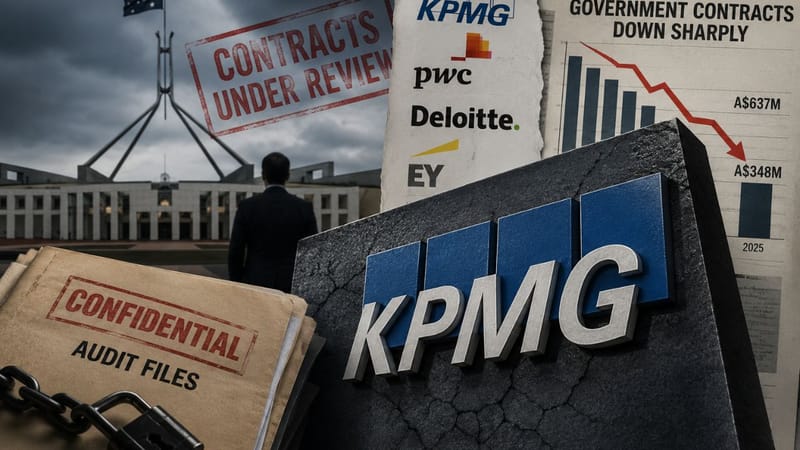
KPMG has come under intense scrutiny over allegations that confidential company information was shared with prospective private-sector clients to help secure audit work.
KPMG Australia's audit leak controversy is expected to further damage the standing of the country's Big Four accounting firms, with federal government spending on their services already declining sharply following previous consulting scandals.
A Reuters review of government tender data found that new federal contracts awarded to KPMG, PwC, Deloitte and EY fell to A$348 million in 2025, compared with A$637 million the previous year. The steep decline highlights the government's growing caution towards major consulting firms amid concerns over governance, transparency and confidentiality.
The figures also provide an indication of the challenges KPMG may face as it works to contain the fallout from its latest scandal.
Audit leak fallout
KPMG has come under intense scrutiny over allegations that confidential company information was shared with prospective private-sector clients to help secure audit work.
The controversy has already prompted the resignation of the firm's chief executive and top auditor after KPMG admitted it had mishandled a whistleblower complaint linked to the alleged misconduct. The firm has since appointed an independent governance adviser to review its internal processes and practices.
Adding to the pressure, the Australian government announced this week that KPMG will be unable to bid for new federal contracts until 30 September.
The Reserve Bank of Australia has also signalled that it is unlikely to renew KPMG's role in operating its whistleblower hotline.
According to a Reuters review of publicly available records verified by lawmakers, KPMG currently holds around A$650 million in active federal government contracts covering areas such as cybersecurity and anti-slavery supply chain audits.
Echoes of PwC
The latest developments have drawn comparisons with PwC's tax leak scandal, which shook Australia's consulting sector in 2023.
PwC was found to have shared confidential government tax policy information to attract clients, triggering widespread criticism. The firm subsequently stepped back from new government work for more than a year and sold its government advisory division, which generated roughly one-fifth of its revenue, for just A$1.
The fallout contributed to a 26% decline in PwC's revenue during the 2024 financial year.
Brendan Lyon, a former KPMG partner, said the loss of government contracts could significantly affect the financial position of major consulting firms.
"It's undoubtedly going to have impacts and that's been discussed by government politicians and various government departments," Lyon said.
KPMG, PwC, Deloitte and EY declined to comment.
Growing concerns
Experts warn that KPMG could face similar consequences if the allegations are proven.
Stephen Bartos, a former deputy secretary at the Department of Finance, said government agencies may become increasingly hesitant to engage the firm.
"It gives rise to apprehensions by government agencies that there might be misuse of confidential materials from the government. And therefore, government agencies will be more reluctant to use KPMG," he said.
"They could be facing state governments cutting back as well. Collectively, it amounts to more than federal government work."
The potential impact could extend beyond federal agencies, with state governments also reviewing their consulting arrangements.
Calls for reform
The latest scandal has renewed debate over Australia's dependence on external consultants and whether stronger regulations are needed for large professional services firms.
Australia's consulting industry expanded rapidly over the past decade as governments increasingly outsourced specialist work.
However, repeated controversies have sparked concerns about accountability and oversight.
Last year, Deloitte apologised after academics found that a report prepared for the Department of Employment and Workplace Relations contained fabricated content generated by artificial intelligence.
The Big Four have also faced regulatory penalties overseas.
In the UK, all four firms have been sanctioned in recent years over audit-related misconduct, while EY paid US$100 million in 2022 to settle allegations that staff cheated in professional exams.
Pressure builds
Parliamentary inquiries launched after the PwC scandal produced a range of recommendations aimed at tightening oversight of the consulting sector. Proposed reforms included limiting partner numbers to improve accountability and separating audit and consulting services to reduce conflicts of interest.
Despite the recommendations, major reforms have yet to be implemented.
Barbara Pocock, a Greens senator and long-time advocate for tougher regulation, said stronger action was needed.
"It's time to force these ungoverned multi-million-dollar partnerships to adopt the same disciplines as large corporations," Pocock said.
"They have lost their social licence to special treatment on tax, transparency, and treatment of whistleblowers. It's time to break them up and properly regulate them as parliamentary inquiries have repetitively recommended."
Richard Colbeck, the conservative senator who chaired an inquiry into the use of external consultants, said recent controversies suggest significant changes may be approaching.
"There's probably a bit of a shake-up coming in that section of the market," Colbeck said.
"Every government department is being asked by one or other of my colleagues how many contracts they have with KPMG. And every single department that I've heard of has said, 'we're reviewing our contracts'."
With scrutiny intensifying and reviews underway across government, the KPMG scandal is likely to deepen challenges for Australia's Big Four firms and accelerate calls for greater accountability across the consulting sector.
Author
Loading...