






Economy Policy
New Zealand flags public sector job cuts ahead of tight election budget






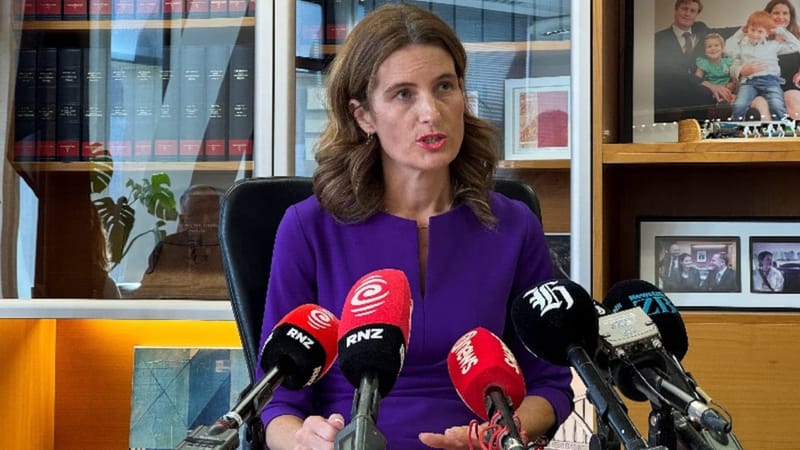
Nicola Willis announced plans to reduce the country’s core public service workforce to no more than 55,000 full-time employees by mid-2029.
New Zealand’s government has signalled deep public sector job cuts and tighter spending controls ahead of next week’s national budget, as Prime Minister Christopher Luxon and Finance Minister Nicola Willis attempt to strengthen their economic credentials before the November election, as reported by Reuters.
In a pre-budget speech delivered to Business North Harbour in Auckland, Willis announced plans to reduce the country’s core public service workforce to no more than 55,000 full-time employees by mid-2029. That would mean 8,700 fewer public sector jobs compared to December 2025 levels.
The move forms part of the government’s broader effort to curb debt, reduce inflationary pressure and restore confidence after economic downgrades from ratings agencies Fitch and Moody’s earlier this year.
Spending squeeze
Willis confirmed that most government agencies will face a 2% reduction in operating budgets in the coming year, followed by further annual cuts of 5% over the next two years if the centre-right coalition is re-elected.
The measures are expected to save NZ$2.4 billion over the forecast period.
“New Zealand simply can't afford another failed spend-up,” Willis said.
She also rejected the idea of election-year giveaways or cash handouts.
“With an election around the corner, it's tempting to proffer another spending band-aid,” Willis said, adding that the government would not repeat what she described as past policy mistakes.
The government had already announced last week that new operating spending for the 2026–27 financial year would be capped at NZ$2.1 billion, a NZ$300 million lower than previously forecast although capital spending would increase to a net NZ$5.7 billion.
AI push
Alongside spending cuts, Willis said the public sector must rapidly adopt artificial intelligence and digital technologies to improve efficiency.
“The public sector hasn’t been keeping pace with advances in AI and digital technology,” she said, stressing that departments would be expected to modernise operations.
The government also plans to reduce the number of departments across the public sector.
Military personnel, teachers and doctors are expected to be exempt from the planned workforce reductions.
Election battle
The announcement comes as New Zealand’s economy continues to struggle with weak growth, rising oil prices and uncertainty linked to the Middle East crisis.
Polls suggest November’s election remains highly competitive, with Luxon under pressure after a slump in popularity and concerns over rising national debt.
Last month, Luxon was forced to call a confidence vote as economic conditions worsened and fiscal concerns intensified.
“The public service is not a make-work function,” Luxon said, defending the proposed reforms and describing the possibility of a leaner public sector as “exciting”.
Opposition backlash
Opposition parties and unions quickly criticised the government’s plans, warning the cuts would damage frontline services and hurt communities already facing economic strain.
Opposition leader Chris Hipkins said the reductions would have serious social and economic consequences.
“These are real people with homes and mortgages and families that are going to lose their jobs. That is fewer people out in the community spending money,” Hipkins told reporters.
“There is no way they can make those kinds of cuts without hitting the front line,” he added.
Union representatives also condemned the proposal.
Duane Leo, a spokesperson for the union representing thousands of public servants, described the measures as “an act of willful destruction.”
Growing divide
The government argues that the previous Labour administration allowed public sector staffing levels to grow too quickly, increasing from around 48,000 employees to more than 63,000 during its time in office.
Willis said public servants currently make up around 1.2% of New Zealand’s population of 5.3 million people and that the target would reduce that figure to roughly 1%.
“That’s unsustainable, it’s unaffordable, and it’s out of step with international trends,” she said.
As the election campaign gathers pace, the debate over government spending, job losses and the role of AI in public services is expected to become one of the defining political issues in New Zealand.
Author
Loading...