






Economy Policy
Australia lifts minimum wage by nearly 6% as FWC backs low-paid workers






The Commission estimates that around 100,000 of Australia's lowest-paid workers will directly benefit from these structural changes.
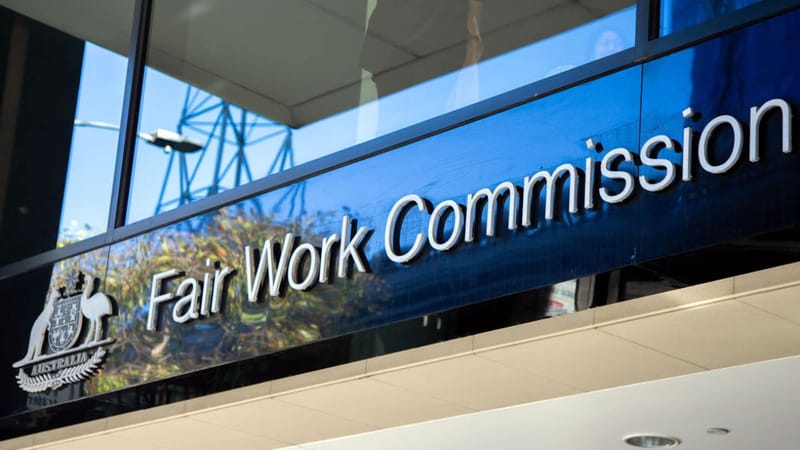
Australia's lowest-paid workers are set for a significant pay rise after the Fair Work Commission (FWC) announced increases to both the national minimum wage and modern award wages, as reported by multiple media reports.
From 1 July 2026, the national minimum wage will rise by 5.97%, increasing from $24.95 to $26.44 per hour. Weekly pay will climb from $948 to $1,004.90 based on a standard 38-hour week.
Meanwhile, workers covered by modern awards will receive a 4.75% wage increase, benefiting around 2.8 million Australians, or 21.1% of the workforce.
Extra support
Beyond the headline increase, the Commission has introduced a targeted boost for the country's lowest-paid workers.
Employees classified under the C13 and C14 wage rates will receive an additional uplift as part of a phased plan to eliminate the C13 classification. The move is designed to raise the wage floor for ongoing employment.
As part of the first stage, the C13 rate will receive an extra increase of around 1.2% on top of the 4.75% award rise. The C14 entry-level rate will increase by the same percentage.
The Commission estimates that around 100,000 of Australia's lowest-paid workers will directly benefit from these structural changes.
Inflation challenge
The decision comes amid rising economic uncertainty.
The FWC said Australia's economy had remained relatively strong until early 2026, supported by economic growth, business investment and productivity gains.
However, a fresh Middle East conflict and three Reserve Bank of Australia interest rate rises have complicated the outlook.
Fuel supply disruptions pushed petrol and diesel prices sharply higher, lifting inflation from 3.7% in February to 4.2% by April.
The Reserve Bank expects inflation to reach 4.8% by June 2026, while the Federal Budget forecasts it could hit 5%.
Against that backdrop, the Commission acknowledged it could not fully restore the real value of wages lost since 2021.
The decision states the 4.75% increase is designed, at minimum, to ensure modern award-reliant employees are "not worse off in real terms than they were as at 1 July 2025."
The Commission also noted that workers above the C13 level would still remain below the real wage value they enjoyed in July 2021.
It added that if inflation falls as expected, the 2027 wage review could provide an opportunity to fully close the gap.
Millions affected
Although only a small proportion of Australians are paid the national minimum wage, around one in five employees receive minimum award rates.
Award-reliant workers are disproportionately female, part-time, casual and low paid.
More than 60% are women, over 70% work part-time and more than half are employed casually.
Four sectors account for more than two-thirds of award-reliant employees:
Accommodation and food services
Health care and social assistance
Retail trade
Administrative and support services
The sectors facing the biggest payroll impact are expected to be hospitality, retail and healthcare.
Employer pressure
The wage rise has been welcomed by employee advocates but is expected to increase pressure on employers already grappling with higher costs.
Matthew Dickason, CEO, Hays APAC, said lower-income workers had experienced particularly weak wage growth in recent years.
"Employers are increasingly focused on their capacity to absorb higher labour costs in a period of still-elevated inflation and uneven demand, while employees face ongoing cost-of-living pressures," he said.
According to Hays research, employers expect average salary increases of 3.8% over the next year, while half of workers still feel underpaid despite receiving pay rises.
Dickason said organisations unable to compete on salary would need to strengthen other aspects of the employee experience.
"Those that cannot compete on salary alone will need to place greater emphasis on career progression, skills development and broader employee benefits to maintain engagement and retain talent," Dickason added.
Gender gap impact
The Commission believes the decision could also help narrow Australia's gender pay gap.
Because women make up the majority of award-reliant workers, the increase is expected to make a positive contribution towards reducing pay disparities.
The FWC also confirmed that wage increases linked to its Priority Awards Review are continuing to be rolled out across female-dominated occupations, including childcare, disability care, pharmacy and healthcare roles.
Additional reviews covering nurses, flight attendants and professional classifications are expected to continue through to the 2027 wage review.
What employers must do
For employers and HR teams, the deadline is clear.
All modern award wage increases will apply from the first full pay period on or after 1 July 2026.
Businesses with large award-reliant workforces should review payroll systems, budgeting plans and compliance processes ahead of implementation.
The Commission is also expected to begin further proceedings later this year to restructure classifications in awards affected by the planned phase-out of the C13 rate.
Author
Loading...