






Economy Policy
Australia faces US tariff threat over forced labour concerns






Agriculture, horticulture, forestry and labour hire have emerged as sectors of concern. For people professionals, the risks often surface through labour hire arrangements, recruitment channels, contractor management and supplier relationships.
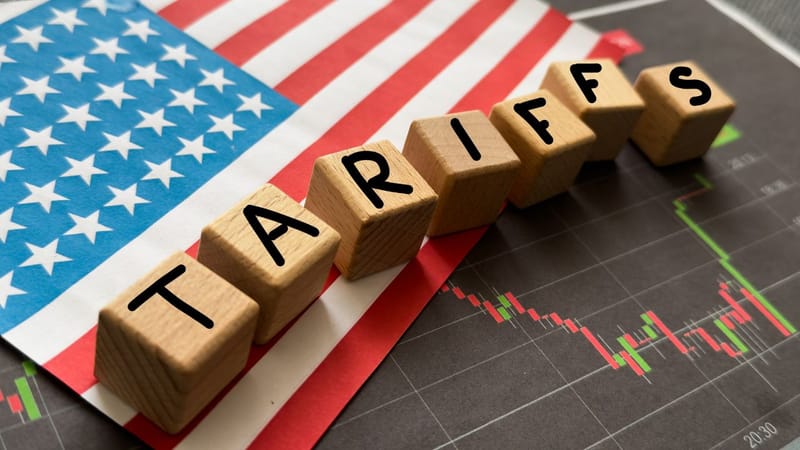
Australia could face a 12.5% tariff on exports to the United States after the Trump administration accused the country of failing to adequately block goods linked to forced labour from entering its market, as reported by multiple media reports.
The proposed measure forms part of a sweeping Section 301 investigation by the US Trade Representative (USTR), which named Australia among 60 economies it claims have not done enough to prevent products made through modern slavery from reaching consumers.
While the move has triggered a diplomatic dispute between Canberra and Washington, it is also placing a renewed spotlight on supply chain accountability and modern slavery risks across Australian organisations.
For HR and people professionals, the issue extends well beyond trade policy.
A clear warning
For organisations that have viewed modern slavery compliance primarily as an annual reporting requirement, the USTR's findings signal a significant shift.
The agency stated that Australia's "acts, policies and practices" related to its failure to enforce a forced labour import prohibition are "unreasonable and burden or restrict US commerce."
In effect, the United States is treating weak enforcement of forced labour controls as an unfair trade practice.
"The failure of our most important trading partners to address the importation of goods made with forced labour is unacceptable," said Jamieson Greer, US Trade Representative.
Australia has strongly rejected the findings.
A spokesperson for Trade Minister Don Farrell said that "Australia maintains our position that any tariffs on Australian exports to the United States are unjustified and inconsistent with our free trade agreement" and that Australia "has robust, comprehensive and world-leading legislation addressing forced labour and modern slavery."
The Australian government has until 6 July to submit public comments, with a formal hearing scheduled for 7 July.
Growing scrutiny
The tariff proposal arrives amid growing concern about modern slavery risks within Australian supply chains.
According to modelling by supply chain risk platform Fair Supply, more than 21% of goods imported into Australia during the last financial year were linked to supply chains where forced labour, debt bondage or other forms of modern slavery are known to occur.
That equates to roughly one in every five dollars spent on imports.
Australia's Anti-Slavery Commissioner Chris Evans raised similar concerns earlier this year, warning that the country risked becoming a destination for goods banned elsewhere because of forced labour concerns.
Pressure is also mounting from investors, unions, businesses and advocacy groups.
A coalition of more than 100 organisations has called on the federal government to introduce mandatory human rights due diligence requirements for large companies. The United Nations Committee on Economic, Social and Cultural Rights echoed that call in March, urging Australia to strengthen the Modern Slavery Act and report back within two years.
Beyond compliance
Under the Modern Slavery Act 2018, organisations with annual consolidated revenue exceeding $100 million must publish annual modern slavery statements.
However, the legislation currently contains no financial penalties for non-compliance.
Critics have long argued that reporting requirements alone do little to prevent exploitation.
The federal government opened consultations on potential reforms in July 2025. Proposed changes include civil penalties, mandatory due diligence obligations and expanded disclosure requirements. No legislation has yet been introduced.
HR's frontline role
The debate carries significant implications for HR teams.
Between July 2024 and June 2025, the Australian Federal Police received 371 reports of alleged modern slavery, averaging 31 reports each month.
Agriculture, horticulture, forestry and labour hire have emerged as sectors of concern.
For people professionals, the risks often surface through labour hire arrangements, recruitment channels, contractor management and supplier relationships.
The challenge is not limited to overseas supply chains.
More than 1,000 hirers in Australia have reportedly been banned from recruitment platforms after exhibiting high-risk indicators of worker exploitation. Concerns include deceptive recruitment practices, visa-linked coercion and debt bondage.
Sponsored worker programmes have also come under scrutiny, with experts warning that some arrangements may expose workers to exploitation risks that fall within employers' reporting and governance responsibilities.
What happens next?
Regardless of whether the proposed tariff is ultimately imposed, the direction of travel appears increasingly clear.
Governments, investors, regulators and civil society groups are demanding stronger action on forced labour and human rights risks.
For organisations, modern slavery reporting is rapidly shifting from a compliance exercise to a test of accountability.
HR leaders are being urged to review supplier and labour hire relationships, strengthen whistleblowing mechanisms and work closely with procurement teams to identify risks across supply chains.
The July hearing may determine the immediate future of the proposed tariff.
The broader expectations around modern slavery, however, are unlikely to disappear anytime soon.
Author
Loading...