
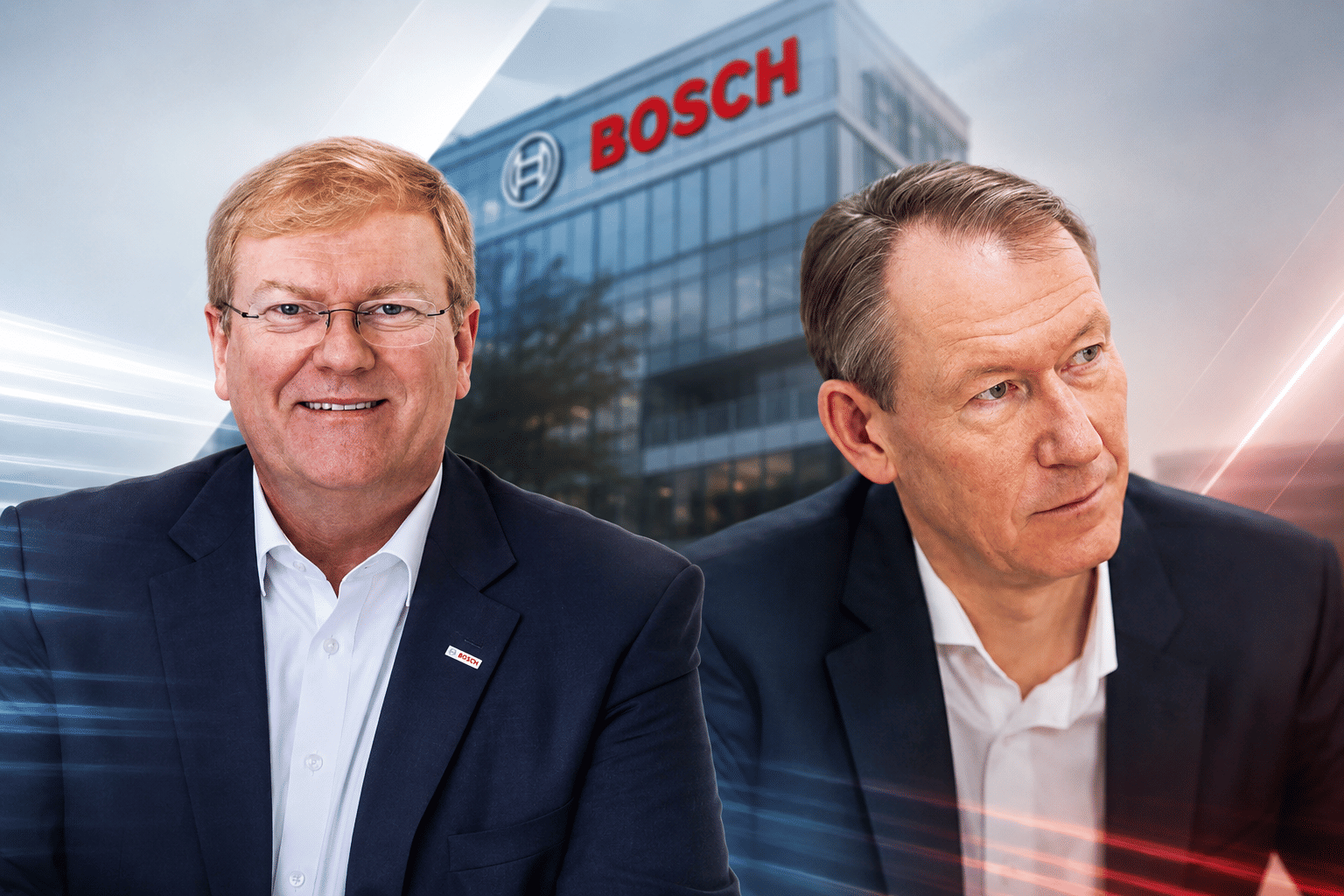
Bosch has announced an unexpected leadership transition, appointing Christian Fischer as its new Chief Executive Officer from July 1 following the departure of Stefan Hartung. The change comes less than a year after the company extended Hartung's contract until 2031, making the succession a surprise for one of the world's largest automotive component manufacturers.
According to Reuters, Hartung reached an agreement with Bosch shareholders to leave the management board after discussions with the company's owners. Bosch said the move was made at Hartung's own request and by mutual agreement.
Leadership plan changes course
The announcement marks a significant shift in Bosch's succession planning. Key developments include:
- Christian Fischer will become CEO from July 1.
- Stefan Hartung will leave the management board after reaching an agreement with shareholders.
- Hartung's contract had been extended by five years in October 2025, with the intention of keeping him in the role until 2031.
- Hartung joined Bosch's management board in 2013 and became Chairman of the Board of Management in January 2022.
According to Bosch, Fischer's close involvement in shaping the company's strategy over recent years is expected to ensure continuity during the transition.
Hartung cites new priorities
Bosch said Hartung requested the change after more than two decades with the company.
In a company statement cited by industry publication Electrive, Hartung said he plans to dedicate his time to new social commitments and entrepreneurial activities outside the Bosch Group.
Hartung joined Bosch 22 years ago after beginning his career at McKinsey & Company. According to Handelsblatt, he served as CEO for around four and a half years, making his tenure the shortest of any Bosch chief executive in the company's modern history.
The publication also noted Hartung was only the seventh CEO in Bosch's 140-year history, reflecting the company's tradition of long-term leadership stability.
Successor inherits a challenging environment
Fischer steps into the top role as Bosch continues to navigate significant pressure across its automotive business.
Before the appointment, he served as Deputy Chairman of the Board of Management after joining Bosch's management board in 2018 from consultancy Roland Berger. Since January 2022, he has shared responsibility for the company's corporate strategy alongside Hartung.
Bosch said Fischer's familiarity with the company's long-term strategy made him the natural choice to lead the next phase of its transformation.
Industry pressures continue to mount
The leadership transition comes as automotive suppliers contend with multiple economic challenges. According to Reuters, the sector continues to face:
- High manufacturing and input costs.
- Weak consumer demand.
- Supply chain disruption linked to geopolitical tensions in the Middle East.
- Volatility in energy prices and global logistics.
Bosch has also been working to restore profitability after reporting weaker financial performance last year.
In April, Hartung introduced measures aimed at rebuilding margins through tighter cost controls and increased investment in advanced technologies.
Industry publication Electrive reported Bosch recorded its first annual loss since 2009, while Handelsblatt said the company is dealing with overcapacity created by the transition to electric mobility and weaker demand across several business segments, including household appliances, power tools and industrial technology.
Restructuring remains a key focus
Bosch has already announced significant restructuring measures as part of its response to changing market conditions.
According to Electrive, the company plans to eliminate around 22,000 jobs in its Mobility division in Germany by 2030, with almost one in five positions already affected.
Industry observers have also pointed to strategic challenges, including heavy investment in hydrogen and fuel-cell technologies and slower progress in emerging areas such as humanoid robotics.
With Fischer now taking charge, Bosch's immediate priorities are expected to centre on executing its transformation strategy while restoring profitability in an increasingly competitive automotive market.
New leaders, fresh capital, workforce shifts and unfiltered conversations — the story of work unfolds here.