







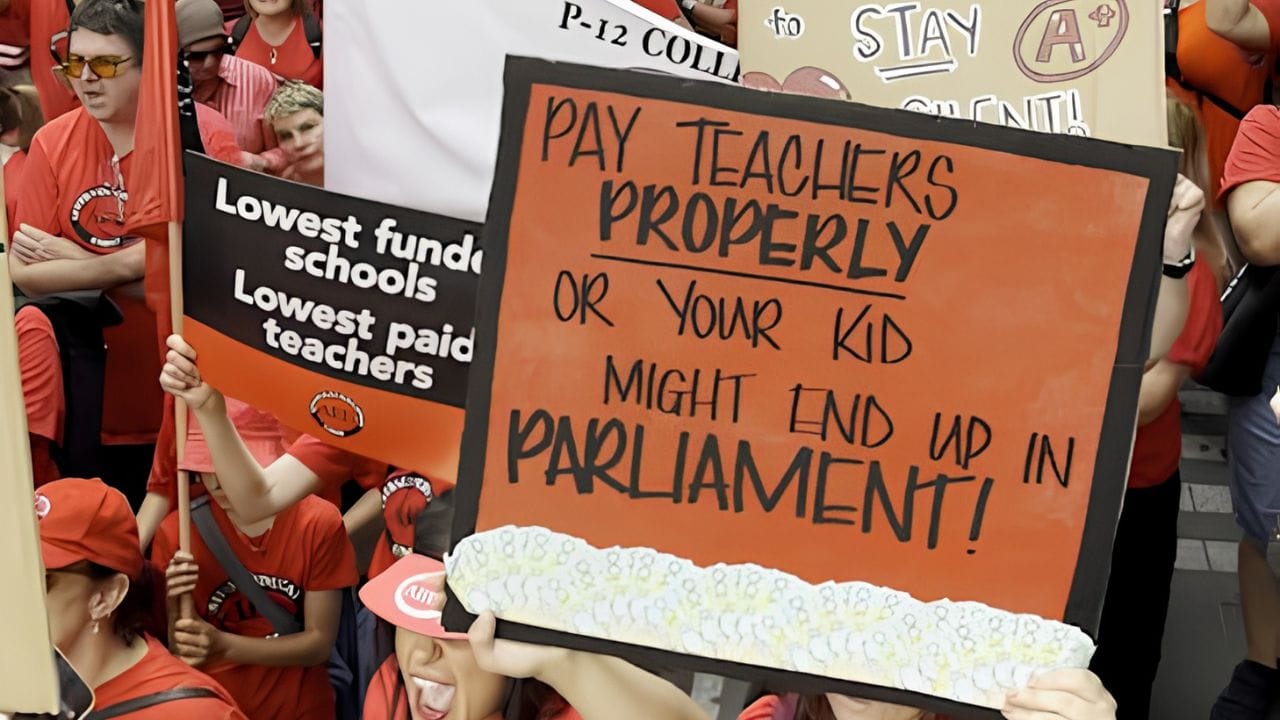
Thousands of Victorian public school teachers and education support staff will walk off the job on Thursday after narrowly rejecting the state government's latest pay offer, escalating a long-running industrial dispute over salaries, workloads and school funding.
According to multiple media reports, members of the Australian Education Union (AEU) Victoria voted down the government's proposal of a 28.3% pay rise over four years, with 51.18% voting against the offer and 48.82% in favour. More than 50,600 union members participated in the ballot.
The strike, which will coincide with a rally in Melbourne's central business district and a march to Parliament House, is expected to disrupt classes across hundreds of state schools during the opening week of the new school term. Members of the Independent Education Union (IEU) Victoria have also pledged to stand in solidarity with the AEU.
Union demands
Justin Mullaly, Victoria President, AEU said teachers had reached breaking point after enduring excessive workloads, staffing shortages and what the union described as inadequate investment in public education.
“If they want Victoria to be the education state, then they need to fund us like we’re the education state and deliver the pay and conditions that our members deserve and that we need.
“The message for the state is really simple: fund our schools properly.”
“It’s not tolerable our schools are the lowest funded in the country.”
Addressing the outcome of the member ballot, Mullaly added, “They've had a gutful. The government's done precious little to do anything meaningful to address that and our members are carrying the weight of all the excessive workload.”
The union has been seeking a 35% pay rise over four years, arguing that graduate teachers remain among the lowest paid in Australia and continue to face mounting workload pressures amid persistent staff shortages.
Education unions unite behind industrial action
The Independent Education Union said it would support Thursday's strike, arguing that workforce pressures extend across both government and Catholic education sectors.
“Both government and Catholic education staff face the same pressures: excessive workloads, workforce shortages and the urgent need for salaries and conditions that properly value their work,” IEU General Secretary David Brear said.
The planned industrial action follows a statewide strike in March, when more than 30,000 teachers, principals and education support staff walked off the job in Victoria's first major teachers' strike since 2013.
Government urges union to call off strike
Deputy Premier and Education Minister Ben Carroll described the ballot result as disappointing and urged the union to abandon the planned industrial action.
“This deal would have made Victorian teachers and education support staff the best paid in the country together with the best conditions.
“I urge the AEU leadership to call off the planned strike, because students should be in classrooms and parents shouldn't be left scrambling for childcare or losing a day's pay.”
The latest rejection means negotiations between the Victorian Government and the AEU are set to continue, with no immediate resolution in sight as schools prepare for widespread disruption across the state.