
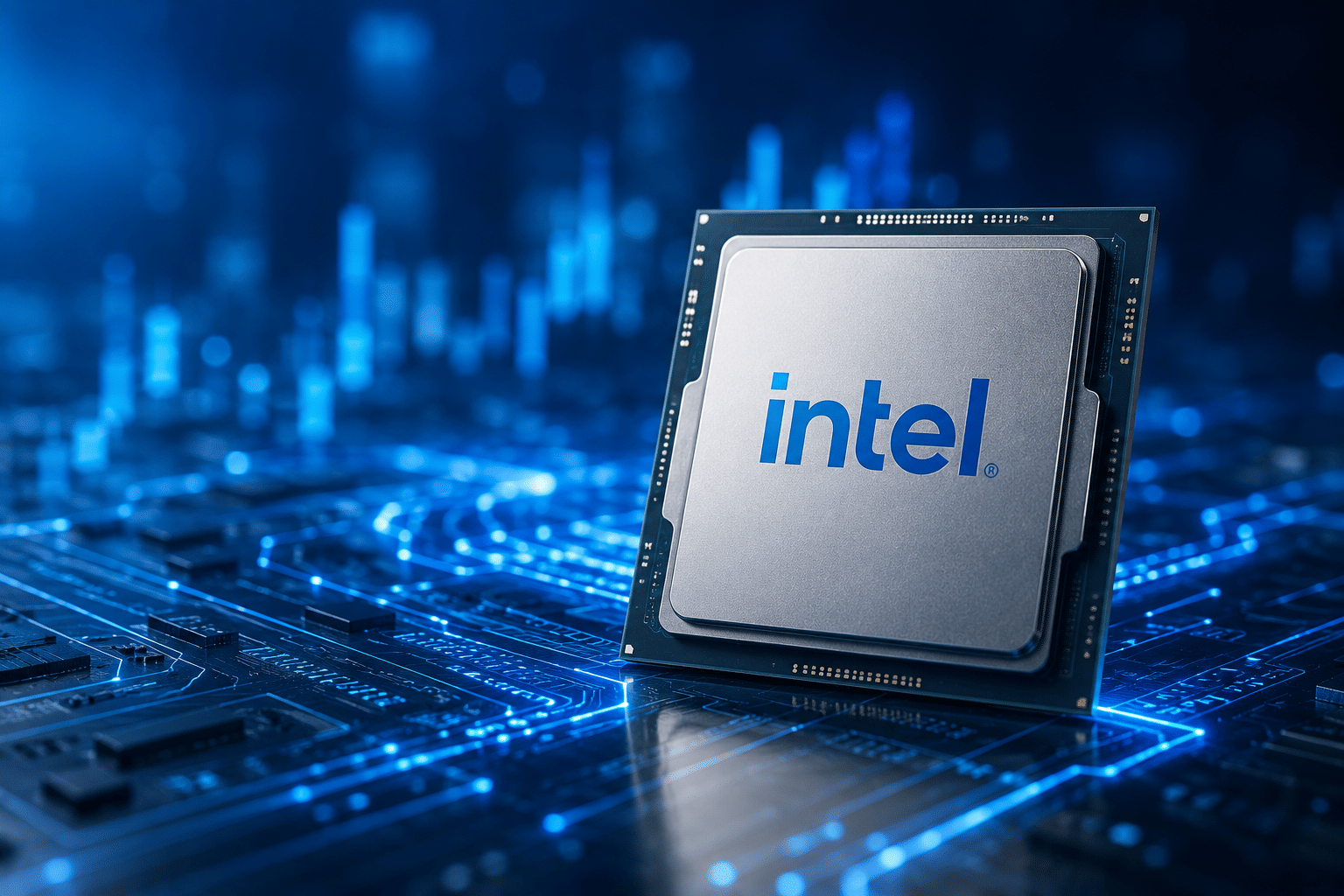
A year ago, Intel was fighting questions about its future.
The semiconductor giant had missed key technology shifts, carried a heavy debt burden and struggled to keep pace with rivals benefiting from the artificial intelligence boom. Today, the conversation looks markedly different.
According to reporting by Fortune, Intel has emerged as one of the market's strongest turnaround stories under CEO Lip-Bu Tan, who took charge in March 2025 and immediately set about reshaping both the company's finances and culture.
Among his most visible moves was a dramatic simplification of Intel's organisational structure. The company reduced management layers from 12 to six, a change designed to improve decision-making, increase accountability and give leadership more direct visibility into operational challenges.
The move reflects a broader effort to rebuild a company that once dominated the semiconductor industry but struggled to adapt to successive technology transitions.
A company searching for a reset
Intel's difficulties did not emerge overnight.
The company lost ground during both the smartphone revolution and the rise of artificial intelligence, while competitors such as Nvidia and TSMC strengthened their positions in critical growth markets.
By the time Tan arrived, Intel was carrying approximately $50 billion in debt, according to comments from Chief Financial Officer David Zinsner cited by Fortune.
"There was a large recognition that we needed to right the balance sheet, but not a lot of clarity on how we were going to do that," Zinsner said.
The challenge facing Intel was therefore not simply technological. It was also organisational and financial.
Flattening the hierarchy
One of Tan's earliest priorities was addressing what executives described as a culture of complacency.
Rather than focusing solely on cost reductions, he targeted the way information moved through the company.
According to Fortune, Intel had developed a culture where management layers often filtered information before it reached senior leaders.
To change that dynamic, Tan reduced management layers by half and encouraged employees at all levels to raise issues directly.
Zinsner recalled Tan delivering a simple message when he joined the company:
"If there's a problem and you tell me about it early, it's our problem, and we've got to fix it. If you have a problem, and you don't tell me, it's your problem."
The approach aimed to foster greater transparency and create faster feedback loops across the organisation.
For HR and leadership teams, the restructuring offers a notable example of how organisational design can influence decision-making and business performance.
Repairing the balance sheet
Cultural changes alone were not enough.
Intel also moved aggressively to improve its financial position through asset sales and external investment.
Key developments highlighted by Fortune include:
- Intel carried approximately $50 billion in debt when Tan became CEO.
- The company secured billion-dollar investments from Nvidia and SoftBank.
- The Trump administration agreed to convert a planned $8.9 billion grant into an equity stake for the US government.
- Intel sold non-core assets as part of its turnaround efforts.
According to Zinsner, support from major investors and the US government helped improve confidence among lenders and investors while strengthening Intel's capital structure.
The financial improvements provided the company with greater flexibility to pursue its longer-term recovery strategy.
AI demand offers an unexpected boost
Intel's recovery has also benefited from broader trends in the AI market.
While the company was widely viewed as having missed the initial AI boom, demand for computing infrastructure has created fresh opportunities for its traditional processor business.
According to Bernstein analyst Stacy Rasgon, growing demand for memory and computing resources supporting AI workloads has increased demand for Intel's CPU products.
That has enabled the company to sell significant volumes of existing inventory and contributed to a sharp rise in investor confidence.
Fortune reported that Intel's stock has climbed nearly 500% during the turnaround period.
However, analysts caution that inventory sales alone will not determine the company's long-term success.
The next test is technology
The most important question facing Intel remains whether it can reclaim its reputation as a leading chipmaker.
The company is currently advancing work on its next-generation 14A manufacturing process, which is viewed as a critical technology milestone.
Success could help Intel attract additional customers for its foundry business, where it manufactures chips on behalf of other companies.
Recent reports that Apple may once again consider Intel as a supplier have also fuelled optimism around the company's prospects.
While those developments remain at an early stage, they have reinforced perceptions that Intel is becoming more competitive after years of decline.
Lessons from the turnaround
Intel's revival is still a work in progress.
The company must continue proving that its products can compete in an industry increasingly shaped by AI and advanced manufacturing capabilities.
Yet the changes under Tan highlight how leadership, culture and organisational structure can become central elements of a turnaround strategy.
By reducing bureaucracy, encouraging direct communication and addressing financial weaknesses, Intel has begun rebuilding confidence among investors, employees and customers.
Whether the comeback ultimately succeeds remains uncertain. What is clear is that Intel's recovery story is no longer being defined solely by technology. It is increasingly being shaped by how the company works, how decisions are made and how quickly leaders respond when problems emerge.