


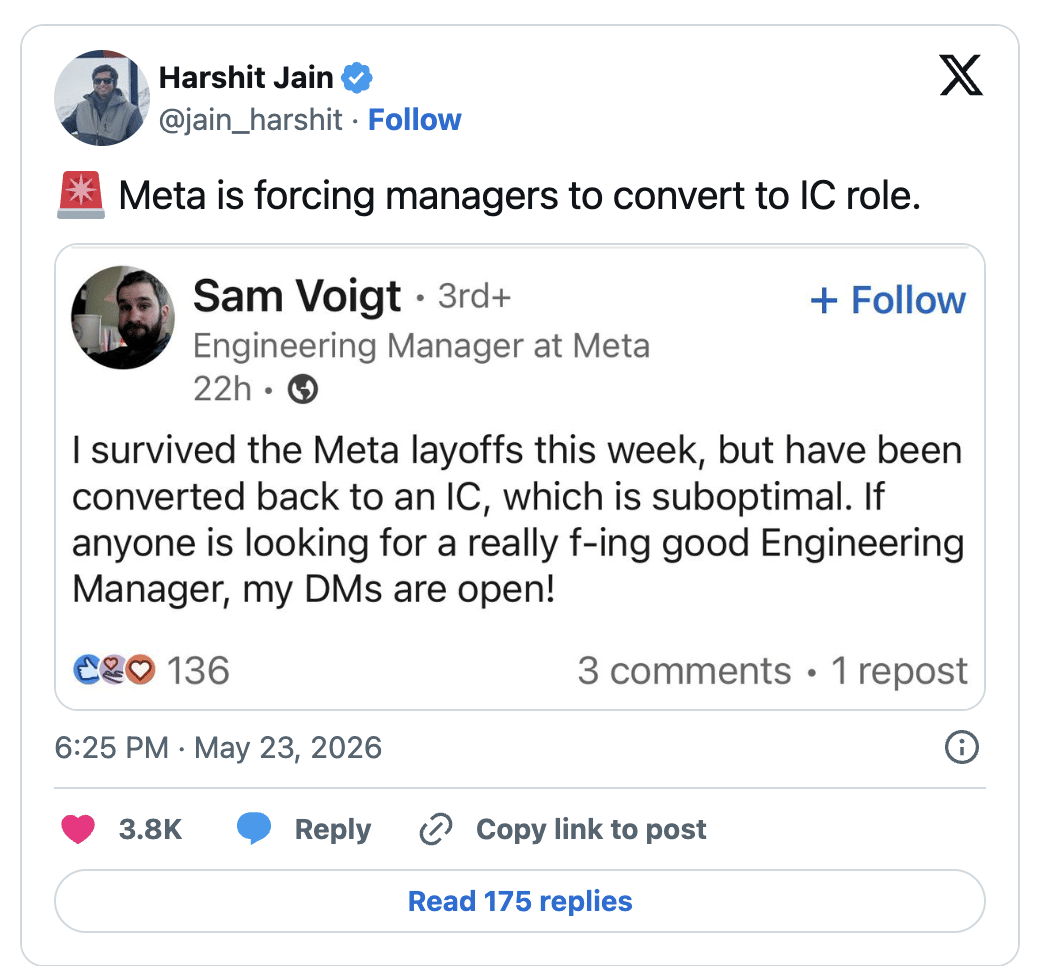
Meta has reportedly reassigned some engineering managers into individual contributor, or IC, roles following its latest round of layoffs and internal restructuring tied to artificial intelligence initiatives.
The reported changes surfaced after a Meta engineering manager posted on LinkedIn that they had survived the company’s latest layoffs but had been moved back into an IC role. The post, later widely shared on X, described the transition as “suboptimal” and said the employee was exploring new opportunities.
The restructuring comes as Meta cuts roughly 8,000 jobs globally, according to reports cited by International Business Times UK, as the company sharpens its focus on AI development and operational efficiency.
Meta flattens management structure during AI push
The workforce changes are part of a broader organisational reset led by chief executive Mark Zuckerberg, who has repeatedly positioned AI as the company’s central long-term priority.
Around 7,000 employees are also being reassigned into AI-focused teams as Meta reshapes internal operations around faster product execution and technical development.
The restructuring reportedly includes:
- Reduction of some middle-management positions
- Reassignment of certain engineering managers into IC roles
- Expansion of AI-focused technical teams
- Larger employee-to-manager ratios across engineering units
Posts circulating on X suggested some teams have moved from manager-to-employee ratios of roughly 1:8 to as high as 1:50, although Meta has not publicly confirmed those figures.
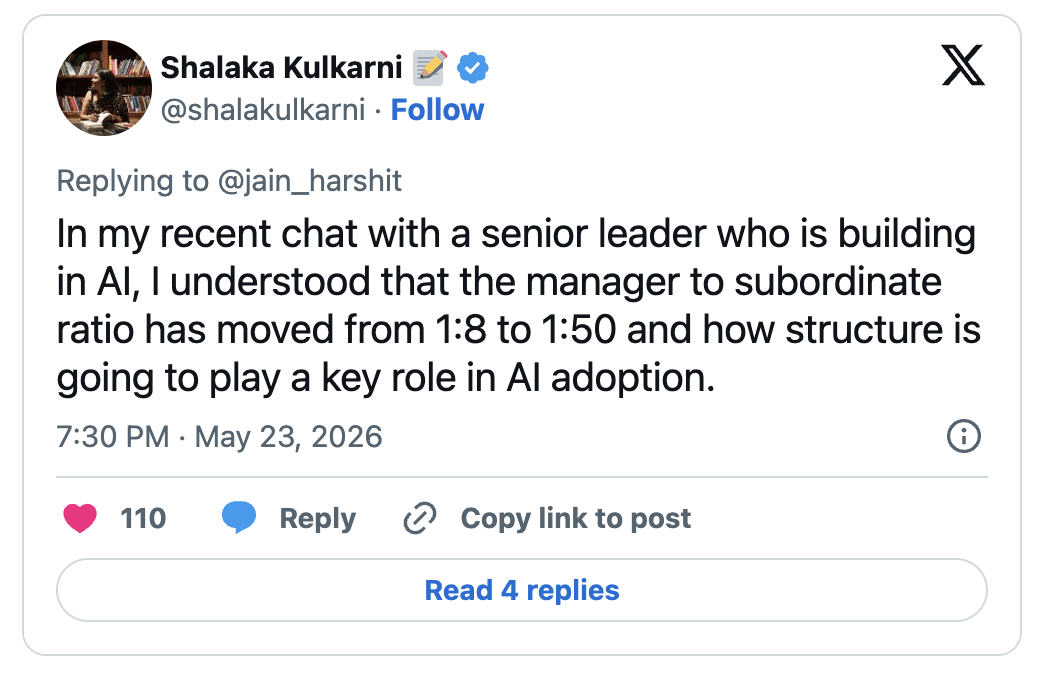
The changes point to a flatter organisational model where fewer managers oversee larger technical teams.
Engineering managers shifted into technical execution roles
In large technology companies, IC roles focus on hands-on technical work such as coding, systems architecture and product development rather than people management responsibilities.
Engineering managers, by contrast, typically oversee hiring, performance reviews, project planning and team coordination.
The reported shift at Meta has triggered mixed reactions online and within tech circles.
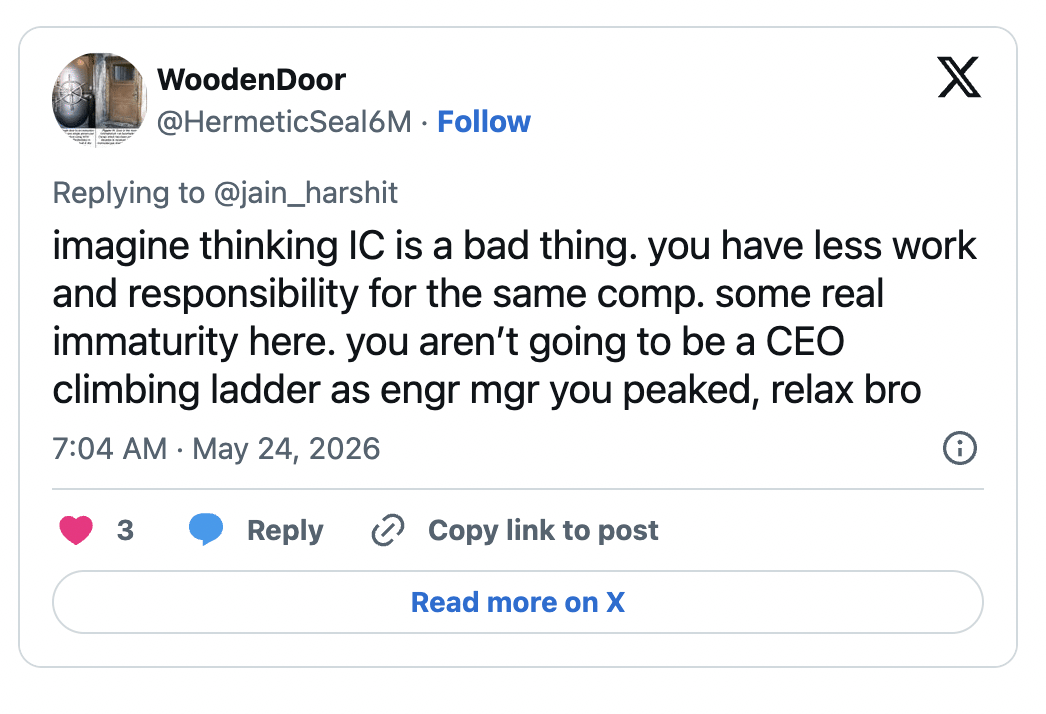
Some industry professionals said moving from management back into IC work should not necessarily be viewed negatively, noting that senior IC roles at large US technology firms can match or exceed management compensation depending on expertise and stock awards.
Others viewed the reassignment differently, saying the move could reduce leadership influence and potentially affect long-term management career progression.
AI restructuring changes workplace hierarchy
The restructuring reflects a wider trend emerging across major technology companies as AI investment accelerates.
Companies are increasingly prioritising leaner operational structures, with greater emphasis on technical output and smaller execution-focused teams.
According to the reports, Meta’s restructuring strategy appears aimed at:
- Removing layers of organisational complexity
- Increasing speed of product development
- Concentrating engineering resources around AI systems
- Reducing management overhead
Meta has previously said its restructuring efforts are intended to improve efficiency and strengthen focus on AI development, though the company has not publicly commented on specific employee posts discussing IC reassignments.
Debate grows over future of management in big tech
The developments have also revived debate over whether AI-driven restructuring could permanently alter career paths within the technology sector.
In many US tech companies, management and IC tracks operate as parallel career ladders rather than hierarchical promotions. Senior ICs can continue progressing into roles such as Staff Engineer or Principal Engineer without moving into people management.
However, transitions away from management can still carry reputational and career implications for employees seeking senior executive responsibilities in future.
The reaction online reflected that divide.
Some commenters described the IC shift as a return to core engineering work with fewer administrative burdens. Others viewed it as evidence that traditional management roles may hold less strategic value inside AI-focused organisations.
As Meta continues investing heavily in AI infrastructure and talent, the company’s restructuring decisions are likely to be closely watched across the wider technology industry, particularly by firms considering similar organisational changes.