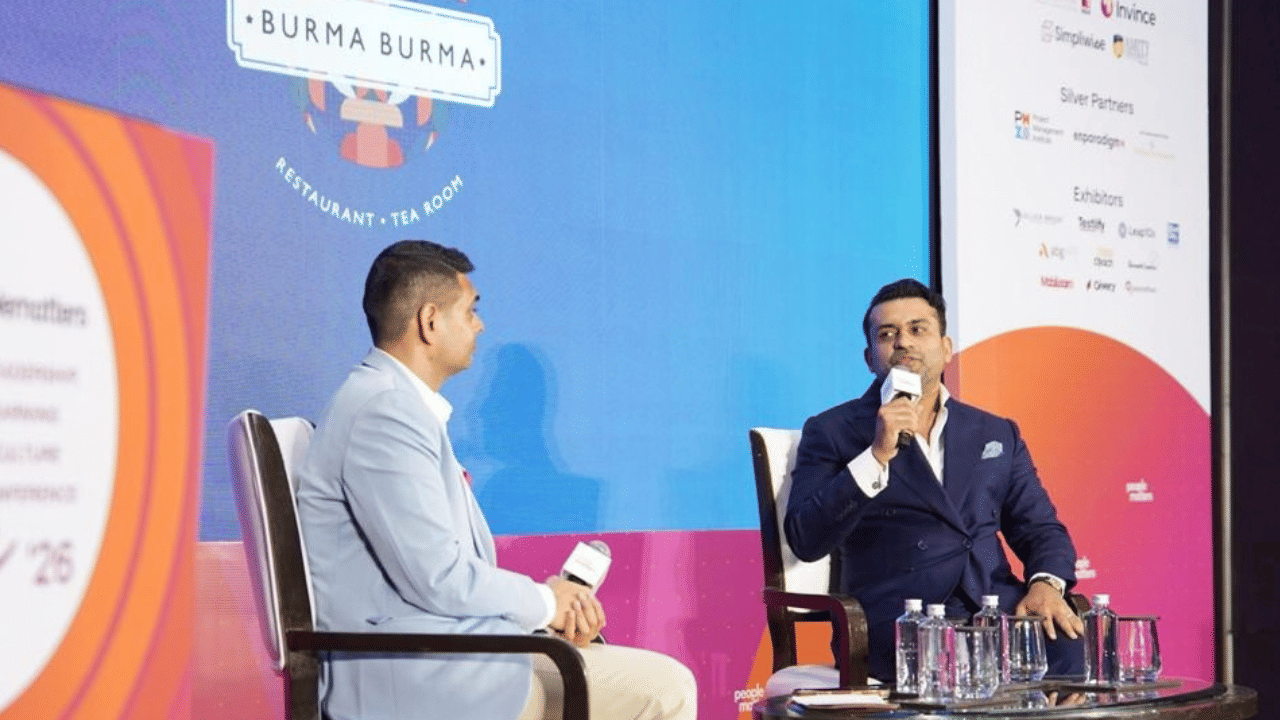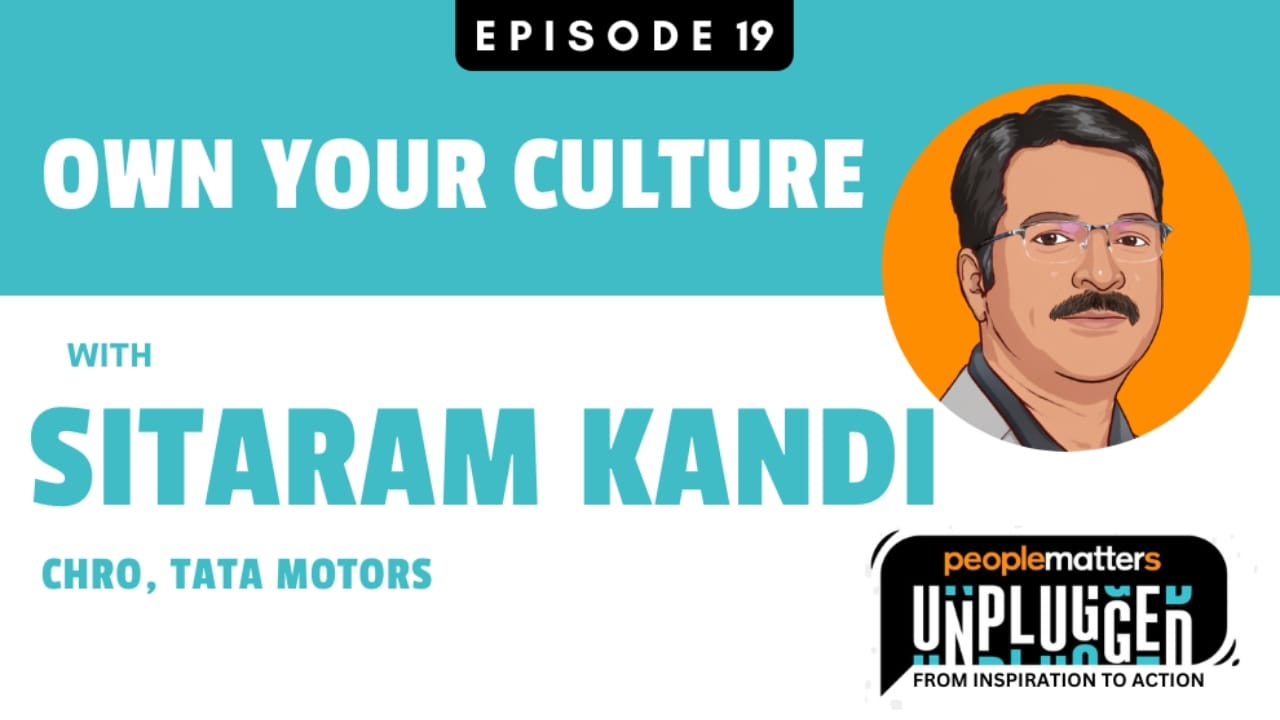
In a inspiring conversation on People Matters Unplugged, Sitaram Kandi, CHRO of Tata Motors, shared his reflections on HR’s evolving role. With a career spanning over three decades—including leadership stints at Monsanto and GE—Sitaram has witnessed the transformation of HR from industrial relations to a key player in shaping business outcomes.
One of the most compelling themes Sitaram highlighted, in his dialogue with Cheshta Dora, Head of Research & Community at People Matters, is Tata Motors’ ability to anchor itself in timeless values while continuously refreshing its systems and policies. This equilibrium has proven particularly resonant with younger professionals.
“We are all fortunate to work in an organisation like Tata Motors, known for its values and systems. It quickly resonates—even with the younger generation,” said Sitaram. In fact, when engaging with potential hires on campuses, “99% of them say they want to join because of the values the company stands for—through good and bad times.”
These values aren’t merely aspirational or decorative—they are foundational. “It’s like the Bible for all of us,” he stated. Tata Motors' code of conduct, its focus on people, community, and safety, as well as culture pillars like bold thinking, collaboration, and empathy, are deeply integrated into the day-to-day decision-making across the business.
HR as culture custodian
Sitaram is clear: culture is everyone’s responsibility. “Every leader owns culture”, he asserted. Tata Motors runs comprehensive engagement surveys annually, and managers at every level are provided with longitudinal data to analyse performance and act accordingly. Action plans are built in collaboration with teams, ensuring shared accountability and ongoing dialogue. HR, in this context, plays a facilitative role.
This approach to culture has helped bridge generational divides in the workforce. “Younger employees are not afraid to speak their minds. They want fairness, transparency and purpose—and Tata Motors provides exactly that,” said Sitaram. His personal anecdotes, including those involving his own children, underscore how the company’s ethos holds relevance across age groups.
A strategic approach to learning
Central to Tata Motors’ talent philosophy is the belief that meaningful learning and development must tie back to business outcomes. “Ultimately, if the business results don’t show up, everything else is just justification,” said Sitaram.
The company takes a holistic view of upskilling—from grassroots to leadership. Over 15,000 apprentices are enrolled in sponsored diploma programmes through academic partnerships. These programmes are fully funded by the business, not CSR budgets, and are designed to create employability and social mobility.
“We ensure 100% placement for those completing these diplomas—whether it’s in our ecosystem, with suppliers, or even competitors,” said Sitaram.
At the technician level, employees are encouraged to pursue higher education, including BTech programmes, with the company’s support. Similarly, engineers are reskilled in emerging areas like EV technology, AI/ML, and customer-centricity through MTechs and MBAs. Recently, the company has begun sponsoring PhDs as well.
Complementing these structured initiatives is an innovative programme called GEMS (Going the Extra Mile). Employees can voluntarily participate in cross-functional projects—regardless of their current role. “If someone in HR wants to work on a finance project, they can. It’s like a college project, and it helps eliminate monotony while building cross-functional exposure.”
Job rotation is also institutionalised through an internal job posting process, giving preference to internal candidates and enhancing transparency around opportunities. For those not eligible for immediate rotation, GEMS offers a stretch platform to grow without leaving their current roles.
Talent retention and balanced compensation
Sitaram acknowledges that while attrition is inevitable, it must be carefully managed. “We’re fortunate to be operating at attrition rates well below industry average,” he noted, adding that the company remains vigilant when it comes to retaining critical and high-performing talent.
His retention philosophy is simple yet powerful: challenge top talent, provide visibility, and offer platforms for growth. “What engages me is what engages others—learning, being challenged, and being noticed for it.”
On the matter of skill-based compensation, Sitaram adopts a measured stance. While acknowledging the market’s shift, he cautions against creating overly narrow domain experts. “If you go too far with skill-based pay, you risk making people unrotatable. They outgrow the market or become immobile within the company.”
Instead, Tata Motors uses a data-driven approach to compensation benchmarking. Salary reviews are influenced by attrition data, future skill demand, and external comparisons with both competitors and aspirational hiring targets.
“Hot jobs shift. What was in demand seven years ago may not be today. We adjust compensation accordingly, but avoid locking employees into static bands based on a single skill.”
Every formal learning intervention—except for broad awareness initiatives—is linked to a business impact project. “Employees must complete a project, approved and validated, before receiving certification,” explained Sitaram. These projects are business-linked and designed to demonstrate practical application of new skills.
The company classifies its learning programmes into three buckets: awareness (not tracked for ROI), specialist, and expert. Only the latter two are counted and assessed for business outcomes. For example, upskilled shop floor operators are expected to compete for staff roles, and engineering employees reskilled in emerging tech are placed in roles requiring those capabilities.
With over 20,000 employees enrolled in external or internal learning programmes at any given time, Sitaram describes Tata Motors as a “parallel university,” building the future capability pipeline proactively rather than reactively.
Today’s HR leaders, Sitaram believes, must be embedded in business strategy from the start. “Every project discussion at Tata Motors now includes a conversation on structure, people and capability—at the same breath as financials or timelines.”