
Digital Culture, as a phenomenon, cannot be separated from the all-pervasive reality of capitalism. The early beginnings of the digital age are identified with industrial-era pioneers such as Charles Babbage (calculating machines), Charles Jacquard (automated weaving loom), and inevitably, and later, Alan Turing and his work on the universal computing machine. Capitalist imperatives led to the work of these people – to embed capital into the production process, so removing the need for humans to carry out the ‘making tasks’, improving efficiency and reducing cost – that is to say, increasing profitability.
A second aspect of digital culture identified by writers such as Charlie Gere and Cohen is the direct line of development from the counterculture of the 1960s to the current time. These writers describe the co-location in time and place of counter-culture aesthetics and ethos with developing computing technology, not the least of which happened in Silicon valley. A desire to express individuality, to explore ways of being that were outside the mainstream culture of the USA at the time, was common amongst the microelectronics and computing scientists and engineers.
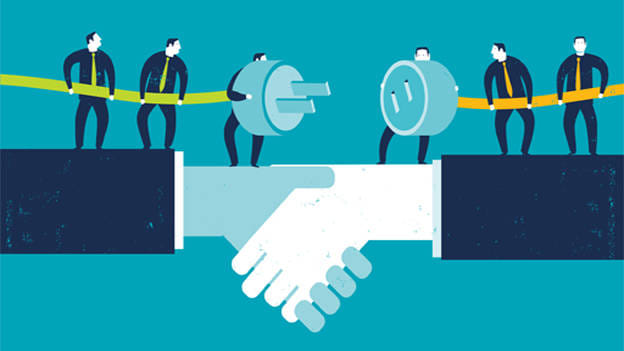
There is a paradox here. Capitalism created the context and ‘need’ for digitalisation. The reaction to capitalism, the 1960s counter-culture, then delivered exactly the answer capitalists were looking for – the personal computer and, thereafter, near-global GAFA technology platforms (Google, Amazon, Facebook, Apple). This ‘origin paradox’ has spawned several more paradoxes.
- Paradox 1: People as data. People have submitted to the panopticon of GAFA and others (one thinks of government agencies), through the data we seem willingly to make available, free, to the market economy. Simultaneously, we cry out for hyper-individuality. The very data we give away is used to categorise, normalise, and rationalise us for commercial ends.
- Paradox 2: Invisibility of digital culture. We access, literally and metaphorically, an essentially invisible digital system, through highly visible and heavily marketed physical digital devices. Our smartphones, computers, and intelligent personal assistants are completely integrated into our daily experience. Yet behind the device is, as Gere describes it, a “…vast, complex, and largely invisible assemblage of information and communications systems through which late modernity operates…”
- Paradox 3: comfort and heroism. We have conflicted needs for passivity and social morality. This is resolved partially through the contradiction of ‘relaxing’ by watching unspeakable horrors on our devices – via mainstream media, Facebook, Twitter, etc. The violence seemingly as raw and unfiltered as possible, perhaps to make us feel actually alive, as opposed to living in a torpor.
- Paradox 4: connection, but no control. The plethora of apps we have available to us allow us to live multiple lives simultaneously. To converse with many people on the same and different platforms at the same time, to organise our love and sex lives, to order goods and services, to multi-task to perhaps extreme degrees. We have never been so connected. Still, we struggle to manage these several lives we live, side-by-side in time. Our egos run riot.
- Paradox 5: production and consumption. The digitalised world of commerce has enabled the market to drive production costs to the absolute minimum. Everything is outsourced, accepting what firms consider, following the work of C. K. Prahalad and Gary Hamel, to be their ‘core competencies’. As products beyond reach of the many have become cheaper and cheaper, capitalism has won over the workers. The same people that have seen their median income stagnate (particularly in the West) over the decades since the 1960s, embrace the very system that has created the hourglass economy.
What on earth has all this got to do with senior leaders? Well…everything! Quite apart from the fact that senior leaders represent and deliver both the capitalist creed and facilitate the digital culture, they also lead the working people/producers – that also consume! This is a privileged position to work from in shaping digital culture and the way it impacts on society. I ask organisational leaders to take to heart this invocation by Aldo Schiavone: “We cannot leave technology, and the network of powers that pervades it, to decide without mediation the ways of life available to us. It appears increasingly necessary to find an equilibrium point that, even while integrating the connection between technology and the market, stands on the outside.”
The point? Become a locus around which mediation and equilibrium can be developed. Make visible to the people in your organisation the paradoxes of digital culture. Make sense of the digital culture within which they work and live. The traditional demarcation of work and private life is no longer a fiction we can abide by. The producer/consumer paradox demonstrates this. Organisational leaders are, de facto, leaders of society too.