







READ the May 2021 issue of our magazine: EMPOWERING 'EXPERIENCE'
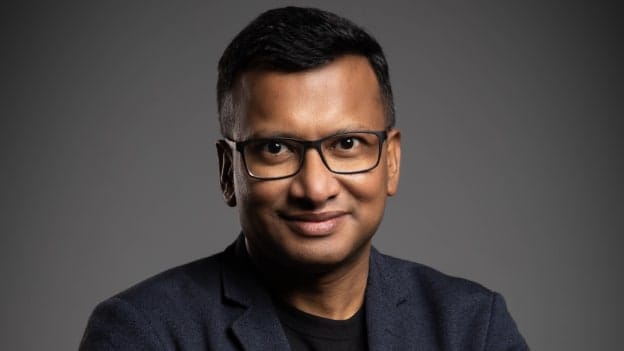
Subhankar Roy Chowdhury Executive Director HR, Lenovo Asia Pacific. Subhankar is an HR leader, speaker, and blogger with varied experiences in re-imagining leadership, culture, and talent practices to create a human work environment in the digital age.
He currently heads HR for Lenovo Asia Pacific, and is responsible for developing the transformation and people strategy in Asia Pacific with a focus on building leadership, cultural transformation, and developing talent resources. With over 10 years of experience at Lenovo, Subhankar wore various hats in the HR segment, most recently as Global Head HR Analytics, Strategy, M&A, where he built the Global HR Analytics function in Lenovo for over 63,000 people across all geographies, leveraging the use of data science in HR to solve organizational challenges.
Prior to Lenovo, Subhankar held various leadership positions in HR consulting and HR generalist roles at Nokia, PwC Consulting, IBM Business Consulting, and Siemens Business Consulting in the Asia Pacific region.
Here are the excerpts.
Do you think there is an increasing focus on employee experience with COVID-19 changing the whole equation of how people work? How do you see the larger EX scenario?
The COVID-19 pandemic has reshaped the way we work, learn and play. In just a year, the entire world experienced an accelerated digital transformation – a paradigm shift on an unprecedented level.
The overall employee experience has also seen a significant change. We are witnessing traditional offices shrinking or becoming periodic collaboration hubs, and home offices become day-to-day workspaces. It is more important now than ever to take a step back and reimagine work-life balance, engagement, and well-being.
Three of our key focuses will be on:
- Offering employees work location flexibility and choice: With 'work from anywhere for roles that can be done remotely, we can offer a better employee experience to help our staff navigate work-life balance through the crisis.
- Employee well-being: With lives and livelihoods at risk, coupled with remote working, empathy takes center stage. Empathy, Transparency, Trust, and Communication are essential to support employees through this crisis. The pandemic has expanded empathy for work-life balance, and this view renews the opportunity to offer flexible working, childcare, and additional work-life options.
- Increased reliance on technology: We need to guarantee that each employee performs their work efficiently and effectively. This means enhancing our IT resources, providing employees with the latest technology hardware (PC, monitors, tablets, smart displays), software (collaboration tools, messaging tools, security tools), and training to increase effectiveness while strengthening virtual experience to make sure our workforce collaborate and are engaged and enabled.
MORE FOR YOU...
- Rob Rosenberg on evolving EX and organizational culture
- Ruth McGill, CHRO, ING Bank on purposeful transformation
- Natasha Dillon, Chief People Officer, Inmarsat on the new world of work
- Interview with KONE's Minna Rouru
- Interview with AXA Group’s Global CHRO
Is this a moment of opportunity to make things better to shape the workplace experience that aligns with the organization and employees' needs? What's the role of HR in this?
While progressive organizations have always focused on enhancing workplace experience, whether it be in the office or remotely, COVID-19 has accelerated the importance and pace of workplace experience. Workplace experience is an organization-wide initiative to help employees stay engaged, productive, healthy, and focused. While HR leads the design and development of workplace experience, it also partners with IT and facilitates Organization Health and Safety teams to bring that to life.
In the current situation, an organization's role and HR's role have gone beyond improving employee experience within an organization to outside the organization. While the pandemic has placed a spotlight on our work, more so than ever, fundamentally, our goal remains the same – ensuring that each and every one of our employees can succeed within the company.
The current pandemic has further enhanced and expanded workplace experience by implementing new work policies to support the current hybrid work model. The guidelines ensure that employees maintain a strong connection with the company, our diversity, and inclusion initiatives are paying off and that employees feel supported in their daily work.
Workplace experience has evolved and kept evolving with changing workstyle and work preference. Hence it is important to review and renew workplace practices and programs with the changing requirements.
With more companies planning to shift to more remote/hybrid work amid the chaos, how can leaders gear up to meet the evolving needs of employees?
With the hybrid work model becoming the new normal for at least the foreseeable future, we must take a holistic approach to engage and inspire our employees. Leadership has an important role to play. As such, we are tackling this from three fronts:
- Leadership focus on people and teams: As the current pandemic is a 'people crisis', the emphasis needs to be on clear, open, and transparent communication across the organization and teams. The pandemic has already highlighted the need for more empathy, flexibility, and compassion from leaders. Attention will be placed on building and fostering emotional connections, collaborations, and camaraderie between employees, thus instilling a sense of purpose and belongingness.
- Leaders Communicate, Communicate and Communicate! Clear, frequent, and inspiring communication goes a long way to build employee trust and engagement. Leveraging different forms of leadership communication (instant messaging, email, newsletter, MS Team/Zoom meetings, phone calls), leaders and managers can constantly be in touch with employees. Taking feedback through an internal communications audit is an excellent way to learn employees' needs, concerns, support needs, and create actions that align with that.
- Building Trust: From a work perspective, managers will have to grant their team the independence and flexibility to complete their tasks at their convenience and measure their work's quality and quantity, compared to evaluating them based on the number of hours they spend at their desk. Correspondingly, companies will have to rely on and trust management's ability to guide and motivate their remote teams effectively and ensure that work commitments and quality are not compromised.
How do you see the role of digital innovations in improving employee experience?
There is no doubt that COVID-19 has accelerated digital transformation – and HR has taken the lead to organizations becoming digital internally. We have already seen companies’ rapid deployment of advanced technologies that help employees remotely connect and collaborate to learn and play securely.
For organizations to successfully manage the diverse, remote and virtual workforce, they need a seamless digital-first experience across the HR life cycle process from hire to retire (Talent Acquisition, Onboard, Performance Management, and Support, Talent Management, Learning and Employee Engagement). Functionally rich, easy-to-use, and platform agonistic digital platform would help enable and drive this change.
Looking at the world post-pandemic, it is likely that the hybrid work model is here to stay. As such, we need to continue to innovate and evolve in expanding hybrid work models that will seamlessly integrate both the physical and digital world. Apart from technology, we need to review and renew employee policies, compensation, and benefits programs for the digital-first experience.
What are the triggers to this rising focus on employee experience? Is it primarily because of the upcoming war on talent?
Globally, the world has more than 1 billion knowledge workers. They are essential to the future world economy, as their importance has exponentially grown over the last decade. While the pandemic forced a global shift to remote work, knowledge workers became even more important than ever before. Knowledge workers have proved instrumental to the economy, especially over the last 20 years, and are now more critical than ever as society shifts to remote work.
Organizations are consistently pursuing knowledge workers. As per the World Economic Forum study, while the current disruption from the pandemic-induced lockdowns and economic contraction, technological adoption by companies will transform tasks, jobs, and skills by 2025. By 2025, the time spent on current tasks at work by humans and machines will be equal. A significant share of companies is also expected to make changes to locations, value chains, and workforce size due to factors beyond technology in the next five years. Employers expect that by 2025, increasingly redundant roles will decline from 15.4% of the workforce to 9% (6.4% decline), and knowledge workers will grow from 7.8% to 13.5% (5.7% growth) of the total employee base of company respondents.
With the above in mind, the need for employee experience to attract and retain knowledge workers becomes critical, and employee experience is the catalyst. With a large number of knowledge workers experiencing the organization strategy, processes and culture 'digitally first', the need for a clear employee experience strategy and execution becomes paramount.
How can organizations measure the impact of their employee experience initiatives? Based on this, how are you devising your EX programs and ensuring the engagement of your workers?
In the last decade, the ability to measure and utilize HR metrics has evolved in leaps and bounds. Today, many companies have well-defined metrics and benchmarks that guide organization people planning. What can’t be measured, cannot be managed and improved.
- What to measure: Employee experience across the employee life cycle. Employee experience can have diverse measurement parameters that include rationale and emotional engagement, recommending a company as a good place to work, manager support, diversity and inclusion, ease of the organizational process, work environment, culture, and many more.
- How to measure: Both qualitative and quantitative data gathering methods are used to understand, learn and act on the data and insights related to employee experience. Qualitative feedback is captured through anecdotal feedback, manager round tables, skip level meetings, and other informal interactive employee communication channels. Quantitative feedback from organization dashboards, metrics that are tracked, surveys, and polls administered offers data-based insights.
- When to measure: While we have had annual engagement surveys, we have increased the frequency of measurements through pulse surveys, frequent round tables, polls, and collaborative team platforms. In some markets, we deployed AI-powered chatbots to proactively identify those who are unhappy, disengaged, or at risk of attrition daily.
The insights gathered above are reviewed, discussed, and shared with stakeholders and employees to review and renew employee experience programs. While technology is a great enabler, especially during the pandemic, employee experience goes beyond technology. A lot of focus is on making people policies human-centric and manager's support beyond technology.
What do you think will be the biggest barriers to empowering employees and elevating their work experience in 2021?
While the pandemic has forced organizations to accelerate digital adoption and rapid deployment of technology has helped to some extent, there are significant barriers to the change process.
- Mindset of measuring workforce productivity versus work hours: As employees' work from anywhere, there is a significant shift in how many hours we work to what we impact do we create. Traditional HR policies defined through working hours in the workplace do not apply anymore. Work-life balance has been replaced by work-life integration as the divisions of work and personal time have blurred. Organizations are challenged both on measuring output without the right tools and not drawing a clear line of ensuring there is no overwork.
- Digital adoption: While organizations build the best digital experience, internal digital adoption needs significant change management. Change management and organizational capability building take time and effort to build employee experience that organizations are ill-prepared.
- Building consistent culture in a virtual world: Culture is the backbone of resilient companies. Culture building becomes challenging in remote working situations as new joiners have less opportunity to experience culture first-hand in the office and have to rely on digital cultural experiences, making the initial onboarding process more of a challenge and something that needs reworking to meet current demands.
- Diversity, equity, and inclusion in the new normal: The pandemic has disproportionately affected diverse populations, and HR's role in ensuring diversity, equity, and inclusion becomes paramount. This includes educating the organization, understanding the realities of diverse experiences, and taking proactive steps to equalize the playing field. A significant reshift of diversity and inclusion approach in the digital world is needed in the new normal.
-----
Know more about what’s new in employee experience at the People Matters Employee Experience India Conference on 10th June, 2021. Register Now!